Planning Your New Home's Plumbing Layout: Key Considerations

Allison Woslager • April 22, 2024

When it comes to building your dream home, every detail matters, including the plumbing layout. Proper planning and consideration of key factors can ensure that your new home's plumbing system functions efficiently and meets your needs for years to come. In this guide, we'll explore the essential considerations for planning your new home's plumbing layout, brought to you by Royal Flush Plumbing LLC in Tacoma, WA.

1. Work with Experienced Professionals

When it comes to building your dream home, every detail matters, including the plumbing layout. Proper planning and consideration of key factors can ensure that your new home's plumbing system functions efficiently and meets your needs for years to come. In this guide, we'll explore the essential considerations for planning your new home's plumbing layout, brought to you by Royal Flush Plumbing LLC in Tacoma, WA.

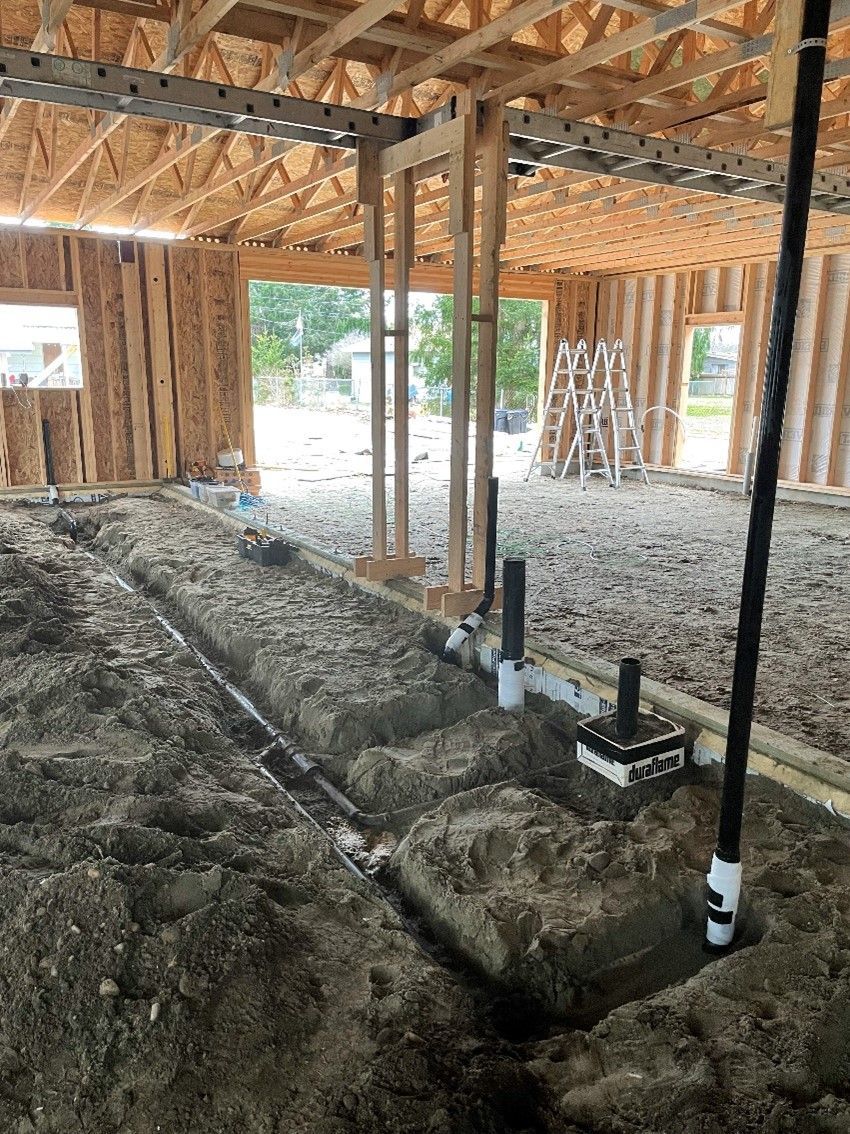
A house under construction with a lot of pipes in the dirt by royal flush plumbing in tacoma.

2. Determine Fixture Placement

Before finalizing the plumbing layout, consider the placement of fixtures such as sinks, toilets, showers, and appliances. Efficient placement not only enhances functionality but also optimizes water flow and minimizes plumbing runs, reducing costs and potential issues.

3. Consider Future Needs

Anticipating future needs is essential when planning your plumbing layout. Think about potential expansions or additions to your home, such as additional bathrooms or a kitchen remodel. Designing with flexibility in mind can save time and money down the line.

4. Account for Water Supply and Drainage

Ensure adequate water supply and drainage capacity for each fixture and appliance. Proper sizing of pipes and fixtures prevents water pressure issues, backups, and inefficient water usage, contributing to a reliable and efficient plumbing system.

5. Incorporate Water Efficiency

Incorporating water-efficient fixtures and technologies can lower utility bills and reduce water waste. Consider options like low-flow toilets, water-saving faucets, and energy-efficient water heaters to promote sustainability and cost savings.

6. Plan for Accessibility

If you're planning to age in place or have family members with mobility challenges, design your plumbing layout with accessibility in mind. Install grab bars, accessible showers, and comfort-height toilets to ensure a safe and comfortable living environment.

7. Account for Ventilation

Proper ventilation is crucial for maintaining indoor air quality and preventing moisture buildup. Include adequate ventilation for bathrooms, kitchens, and laundry areas to reduce the risk of mold, mildew, and odors.

8. Budget Wisely

Finally, establish a realistic budget for your plumbing layout. Factor in the cost of materials, labor, permits, and any unforeseen expenses. Working closely with your plumbing contractor can help ensure that your budget aligns with your vision and priorities.

By considering these key factors and collaborating with experienced professionals like Royal Flush Plumbing LLC, you can create a well-designed and efficient plumbing layout for your new home. Contact us today to learn more about our plumbing services and how we can assist you in achieving your dream home plumbing system in Tacoma, WA.

Share This Article:
December 2, 2025
There's nothing quite like the shock of stepping into a morning shower only to be hit with ice-cold water. Or finding a puddle around your water heater. Or fiddling with the pilot light for the third time this month, wondering why it won't stay lit. When your water heater starts acting up, you face an immediate question: Can this be fixed, or is it time for a new one? Getting it right can save you hundreds—or even thousands—of dollars. Let's walk through what you need to know. Average Lifespan of Water Heaters Traditional tank water heaters (gas and electric) typically last 8 to 12 years . Gas models may wear out closer to 8-10 years, while electric tanks often reach 10-12 years with proper care. Tankless water heaters can last 15 to 20 years or more with regular maintenance. The trade-off is higher upfront cost, but extended lifespan often balances that out. Several factors shorten lifespan: hard water accelerates corrosion, sediment creates hot spots that damage tank lining, and neglected maintenance turns small problems into big ones. If your water heater is approaching its expected lifespan, have a professional look—even if it's still working. Catching problems early gives you time to plan rather than scrambling for emergency replacement. Signs It's Time to Replace Some symptoms mean it's time to shop for a new water heater: Rusty or discolored water from hot taps signals tank corrosion. Once rust starts, it doesn't stop—and a corroded tank will eventually leak. Leaks or moisture at the tank base mean the inner lining has failed. There's no fixing this. If you see water pooling, plan for replacement immediately before a small leak becomes a flood. Loud popping or rumbling noises indicate serious sediment buildup. If your water heater sounds like a popcorn machine, damage may already be done to heating elements or tank lining. Repeated pilot light failures on gas units—especially after replacing the thermocouple—suggest deeper problems with the gas valve or control system. Rising energy bills without increased usage signal lost efficiency. An aging unit works harder to deliver the same hot water, driving up utility costs monthly. Age plus any major issue is the clincher. If your water heater is over 10 years old and showing these symptoms, replacement almost always makes more financial sense than repair. When a Repair Might Be Enough Not every problem means game over. Some fixes are straightforward and cost-effective: Thermostat issues on electric heaters are inexpensive to fix Heating element replacement restores full function for a fraction of replacement cost Pilot light components like thermocouples are relatively cheap to replace Pressure relief valve replacement is a simple safety-critical fix Annual maintenance like flushing and anode rod checks prevent major problems The key question: How old is your unit? Under 6 years with a minor repair? Fix it. Over 10 years? Even modest repair costs might be better spent toward a new, efficient unit. Upgrade Options for Tacoma Homes Tankless water heaters offer compelling benefits: endless hot water on demand, 20-30% energy savings, space savings with wall mounting, and 15-20+ year lifespan. Trade-offs include higher upfront cost (2-3 times a tank heater), proper sizing requirements for peak demand, and installation complexity that may require upgraded gas lines or electrical service in older homes. Good news for Tacoma homeowners: many older homes in Stadium District, North End, Hilltop, and surrounding neighborhoods can accommodate tankless retrofits with minimal modifications. A qualified plumber can assess your setup. If tankless doesn't fit your budget or home, upgrading to a high-efficiency tank water heater still delivers significant energy savings. Cost Factors and Timelines Repairs: Most complete in 1-2 hours during a single service call. Common repairs typically range from $150 to $500. Replacements: Tank-to-tank replacement takes 2-4 hours. Tankless installations may take a full day or two visits. A reputable plumber provides clear diagnosis before starting work, explains options honestly, offers upfront pricing, and discusses financing if needed. Many companies offer payment plans that make upgrading affordable. Maintenance to Extend Lifespan Flush annually to remove sediment buildup. Set temperature to 120°F —hot enough for household use while reducing corrosion and energy waste. Check the anode rod every 2-3 years; replacing this $20 part beats replacing a $1,200 heater. Schedule professional inspections if your unit is over 6 years old. Don't Gamble With Your Hot Water Water heater problems rarely resolve themselves. That strange noise or occasional cold shower is your first warning—ignoring it risks complete breakdown at the worst time. Ready to find out what's going on? Schedule an inspection today. We'll give you an honest assessment, explain your options clearly, and help you make the right decision for your home and budget.  Serving Tacoma homeowners with straightforward plumbing solutions. Because you deserve reliable hot water—and honest answers.
Rainy day view from a porch, showing a wet path, green bushes, and trees.
October 31, 2025
Learn what Tacoma homeowners are responsible for when it comes to side sewers. We explains who maintains what, common problems in older homes, and how camera inspections and repairs can prevent costly sewer backups.
Dripping Kitchen Faucet
September 30, 2025
Ignoring a dripping faucet can waste 3,000+ gallons yearly. Learn how quick faucet repair saves Tacoma homeowners money and prevents water damage.
A room under construction with a window and pipes hanging from the ceiling.
By Jen Woslager October 15, 2024
This guide aims to educate Puyallup homeowners on the basic framework and common challenges of residential plumbing, empowering you with the knowledge to manage and maintain your system effectively.
A man is standing in the dirt next to a blue pipe.
By Jen Woslager October 1, 2024
Learn why correct plumbing installation is crucial in new Tacoma constructions for durability, compliance, and cost efficiency.
A water heater is sitting in a room next to a wall.
By Jen Woslager September 16, 2024
Keep your home or office comfortable with expert water heater repair and installation by Royal Flush Plumbing in Puyallup, WA. Contact us today!
See More Posts

Schedule Service Using The Form Below

Blog Contact Form