
Slow or Clogged Drains
A sink that takes a minute to empty, a tub you stand in, or a drain that gurgles when something else runs. Here is why Tacoma drains slow down and clog, what you can safely check, and how we clear them so they stay clear.
Why Is My Drain Slow or Clogged?
A drain slows down when something narrows the pipe: hair and soap at a tub, grease and food in a kitchen line, scale in old cast iron, or a sag in the pipe that holds water and catches debris. If several fixtures slow at once, the blockage is past them, in a shared line or the side sewer.
The job we think about most was a kitchen drain in Tacoma’s West End last winter. At the end of November, Jimmy and Charles ran the cable and the line would not clear, so they left it over the weekend to see whether it would drain down on its own. It did not; the pipe was still full on Monday. The following week Jimmy opened the basement ceiling and found the cause: a little more than twenty feet of 2-inch ABS with a heavy belly in the middle, where about ten feet of pipe hung with no support and years of grease had settled in the low spot. He cut out the sagging run, hung new 2-inch ABS with a hanger every four feet, ran water through it, and came back the next Monday to hydro-jet the rest of the line and put a camera through it. Clear pipe, and the sink flood-tested clean before he left.
Request Service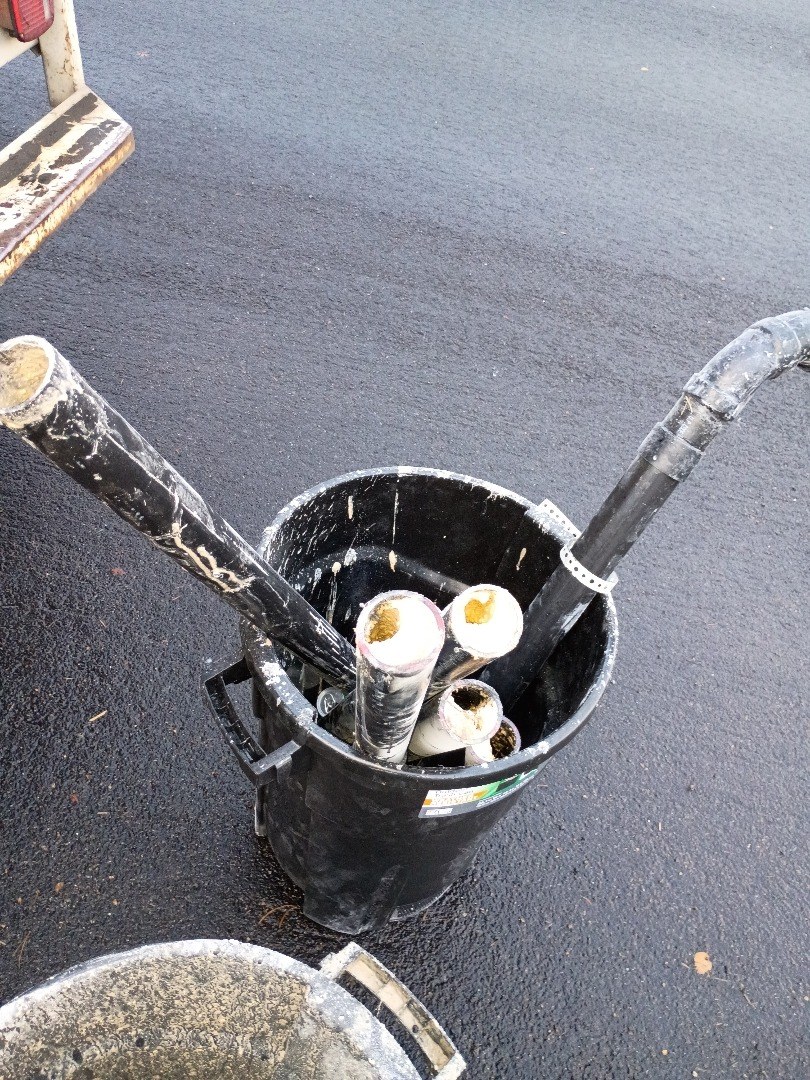
Why Drains Slow Down or Clog
The causes we find under Tacoma homes, roughly in the order we check them.
Hair and Soap at the Tub
Hair wraps the stopper crossbars and the top of the trap, soap binds it, and the tub drains a little slower every month. It is the most common clog in the house and the easiest to clear properly.
Grease and Food in the Kitchen Line
Warm grease goes down as a liquid and sets as a solid where the pipe runs flat and cool under the floor. Coffee grounds and rice pack into it. A kitchen line clogs from the bottom up, which is why a plunger buys a week and not a year.
Scale in Old Cast Iron and Galvanized Drains
Pre-war homes in the North End, Hilltop and the Stadium District still drain through pipe whose inside is rough and narrowed with rust. Everything catches on it. A cable clears it; a camera tells you how much pipe wall is left.
A Belly or Sag in the Line
A horizontal drain that lost its support dips in the middle and holds standing water, and solids settle in the low spot until the pipe is full. The West End kitchen line above is the textbook case. No cable fixes a belly for long; the sagging section has to be re-hung or replaced.
A Vent Problem That Looks Like a Clog
A drain that gurgles and drains slowly with nothing blocking it may be starved for air. A blocked or undersized vent lets the trap siphon and the pipe glug instead of flow. It is worth ruling out before anyone cuts into a pipe.
A Partial Blockage in the Main Line or Side Sewer
When the lowest drain in the house is the slow one, or a flushed toilet sends water up the tub, the problem is downstream of every fixture: roots, an offset joint or a break in the main line or side sewer. In Tacoma that side sewer is the homeowner’s all the way to the city main.
Where the water goes matters too. Tacoma runs separate storm and sanitary systems, so a floor drain or yard drain that backs up only in heavy rain is usually telling you about stormwater and the storm side, not a clog in the house drains. We check which system a drain is on before we treat it.
What You Can Safely Check
Ten minutes, a flashlight and a bucket. Nothing cut, nothing poured.
Count the Slow Fixtures
One slow drain is a clog at that fixture. Two or more slowing together, or the lowest drain backing up, means a shared line or the side sewer, and that is where to stop and call.
Pull the Stopper
Most tub and bathroom sink stoppers lift or unscrew. Clear the hair off the crossbars and the first few inches of pipe with a bent wire or a plastic hair tool, then run hot water and see what changed.
Look Under the Sink
Put a bucket under a plastic P-trap, loosen the slip nuts by hand and empty it; tighten them back and check for drips. A metal trap or one that will not turn by hand stays put. Note whether the dishwasher hose is kinked or tied in below the trap.
Plunge or Hand-Auger a Single Fixture
A cup plunger over a tub drain, with the overflow plate held closed with a wet rag, moves a near clog. A hand auger from the overflow opening reaches the trap. Stop if the cable hits something hard and will not turn; that is old cast iron or a fitting, not the clog.
When to Stop
Stop if water rises in a second fixture while you work, if you have already poured a chemical cleaner in (tell us, so nobody gets splashed), or if the drain is on cast iron and you are tempted by a rented power auger. The symptom-by-symptom guide walks through what each pattern usually means.
How We Clear a Slow or Clogged Drain
The method follows the cause. Nothing gets replaced until we know why it slowed down.
Cable From the Right Access
A tub from the overflow, a sink at the trap arm, a main line at the cleanout. We run the cable until the line drains at full speed, then fill the fixture and watch it go.
Learn more →Camera When It Has Happened Before
A clog that has come back, or one that involves more than one fixture, gets a camera so we can see the belly, the roots or the break before we recommend anything.
Learn more →Hydro Jetting Where the Pipe Allows
Grease-packed kitchen lines and main lines that keep catching debris get scoured with water after the camera has confirmed the pipe can take it, as on the West End line once the new section was in.
Learn more →Replace the Section When the Pipe Has Failed
A belly, a rusted-through cast iron run or a crushed pipe is a repair, not a cleaning. We re-hang or replace the bad section, support it properly, and test it before the ceiling or floor closes.
Learn more →Urgent Calls During Business Hours
A drain that has stopped completely, or sewage coming up the lowest drain, gets same-day service during business hours when the schedule allows. Stop running water into it and call.
Learn more →Drain cleaning across the city is on our Tacoma drain cleaning page, or browse all common problems.
Why Tacoma Homeowners Call Royal Flush
Veteran-Owned & Local
Family-operated out of Tacoma, serving Pierce and King County.
Upfront Pricing
You approve a clear price before any work starts. Estimates are free.
Licensed & Insured
Washington license #ROYALFP787R1, bonded and fully insured.
Fast Local Response
Same-day service when the schedule allows during business hours.
Flexible Payments Through Wisetack
Spread a larger repair over monthly payments, with no prepayment penalties and no hidden fees. VIP Home Protection members save 10% on every service.
Slow and Clogged Drain Questions
Straight answers before you pick up the phone.
Because the clog is at the tub: hair and soap on the stopper crossbars and in the trap below it. Pull the stopper and clear what you can reach; if it is still slow, the hair is in the trap or the line beyond it, which we cable from the overflow without taking anything apart.
A cup plunger and a hand auger are safe on a single clogged fixture, including a tub, if you work from the overflow and stop when the cable hits something hard. A rented power auger in old cast iron is not safe, and neither is any auger after a chemical cleaner. Several slow fixtures is not a plunger job.
Don’t Gamble On Your Plumbing!
Veteran-owned, licensed and local. Help with slow and clogged drains across Tacoma and the South Sound: call us or [request service](/quote) and we will say what we found before any work starts.